
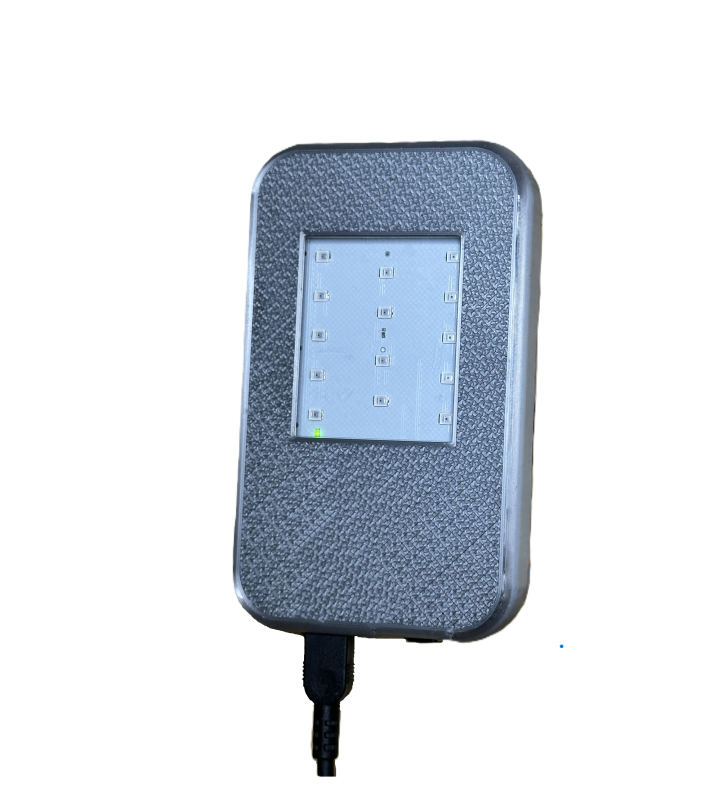
This post documents the optical and thermal behavior of the current generation device. Older blog posts document earlier design iterations and are retained for historical context.
Purpose
This post summarizes optical output and thermal behavior measurements for the current generation of the Rejuvulite handheld red / near-infrared device. It is intended to provide transparency into how measurements were taken and how the data should be interpreted, rather than to make performance or outcome claims.
Older blog posts on this site document earlier design iterations and are retained for historical context. This post reflects the current hardware.
Hardware Overview
- Wavelengths: 660 nm (red) and 805 nm (near-infrared LEDs)
- Channels: Red, NIR, and combined operation
- Optical window: 42 × 48 mm (~20.2 cm² emitting area)
- Intended use: Near-contact operation
Measurement Overview
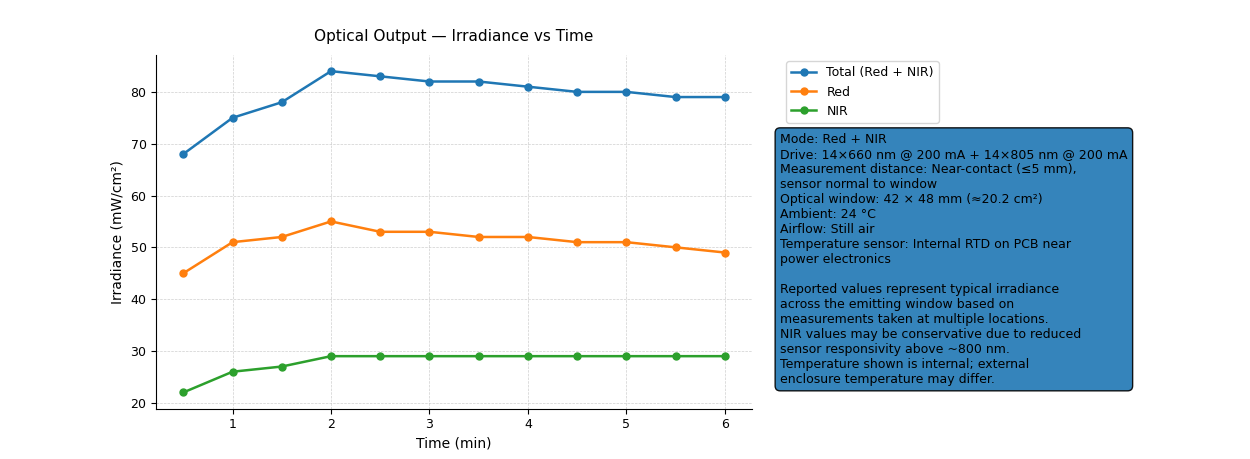
Figure 1. Measured steady-state optical output and internal temperature behavior for the current hardware under near-contact operation.
Optical Output
- Optical power density measured using a calibrated optical power meter
- Sensor positioned normal to the emitting surface at near-contact distance (≤5 mm)
- Measurements taken after thermal stabilization
- Red and NIR channels measured independently and in combined mode
- Reported values represent typical irradiance across the emitting window, based on measurements taken at multiple locations
Note on NIR measurements:
The optical power meter used is optimized for visible wavelengths. NIR values should be considered conservative estimates due to reduced sensor responsivity at wavelengths above ~800 nm.
Thermal Measurements
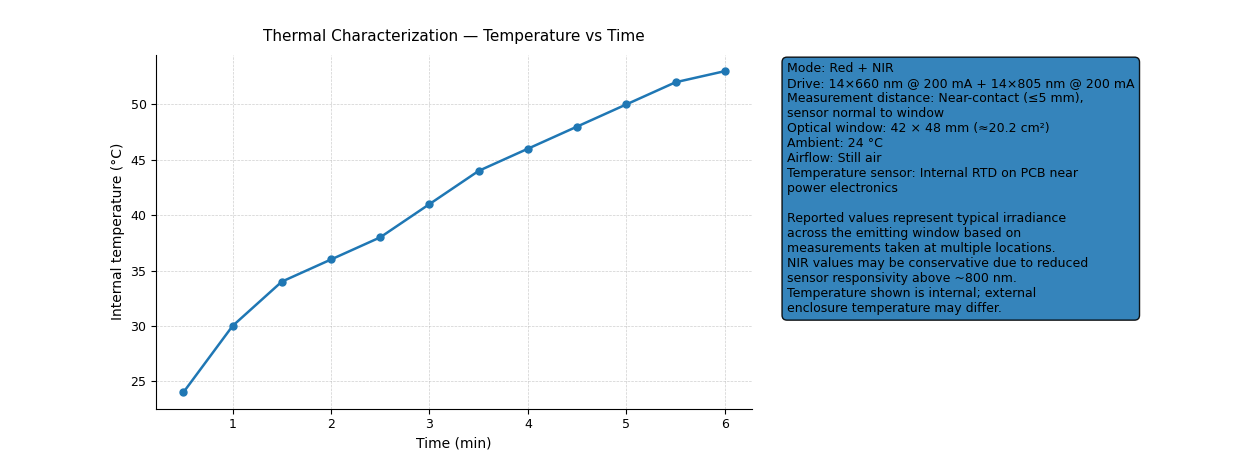
Figure 2. Measured internal temperature versus time behavior for the current hardware under near-contact operation.
- Temperature measured using an internal RTD located on the PCB near the power electronics
- Temperature shown represents internal device temperature, not enclosure surface or skin-contact temperature
- Measurements taken under continuous operation in still air at room ambient
- Thermal data is presented to illustrate steady-state behavior during realistic operating durations.
Why Steady-State Behavior Is Emphasized
Rather than optimizing for cold-start peak output, the design focus has been on:
- Repeatable steady-state irradiance
- Controlled energy delivery over time
- Predictable thermal behavior during typical session lengths
- This aligns more closely with how near-contact devices are used in practice.
What This Data Is (and Is Not)
- Is: A characterization of current hardware behavior under defined conditions
- Is not: A medical claim, biological efficacy claim, or safety certification
- Is not: A comparison to other products or a statement of superiority
- These measurements are shared to provide context and transparency.
Closing
This post is intended to serve as a reference point for how the current device behaves optically and thermally under steady-state conditions. As the hardware continues to evolve, additional notes may be added to document future revisions.
Figures shown represent measured behavior of the current hardware and may evolve with future revisions.